Many school trips are planned with positive motivations, but not every one of them provides significant educational experiences. Going to a landmark or exploring a city doesn’t inherently mean it has educational significance. For teachers organizing overseas programs, the difficulty lies in identifying which locations truly enhance curriculum objectives, foster critical thinking, and promote lasting student growth instead of providing just superficial experiences.
Educational travel in China presents a different level of opportunity. The country combines deeply rooted historical systems with one of the world’s fastest-evolving innovation ecosystems. Students can move from examining imperial governance and cultural continuity to observing artificial intelligence, advanced manufacturing, and urban transformation in real time. This contrast creates a learning environment where past and future are not taught separately but experienced side by side.
In this article, we outline how educators can evaluate destinations in China based on real educational outcomes. We focus on practical criteria, from aligning locations with subject areas to designing experiences that connect classroom learning with real-world industries. The goal is to help schools plan China school trips that go beyond observation and deliver structured, measurable learning.
A widespread misunderstanding in international education is that simply being exposed results in actual learning. In truth, just traveling to a place, regardless of its historical or cultural importance, does not ensure valuable results. Students can observe, capture images, and remember key moments, yet without organization, those experiences seldom lead to greater comprehension.
Educational travel in China gains significance when it is purposefully crafted to transition students from observation to interpretation. For instance, exploring a historic location can enhance humanities education, but this is beneficial only when students are encouraged to inquire about governance, social organization, or historical continuity. The distinction is in how the experience is presented, not merely in the location it occurs.
Programs that deliver strong outcomes tend to share a consistent set of characteristics. These are not tied to a specific destination, but to how the experience is constructed and facilitated:
When assessing whether a destination supports educational travel China in a meaningful way, it is useful to apply a simple but rigorous set of questions:
If these questions cannot be answered clearly, the destination may offer interest, but not depth.
China presents a unique chance for students to interact with history, viewing it not as a fixed topic, but as an ongoing and observable progression. Political systems, social frameworks, and cultural beliefs have developed over millennia, but numerous aspects of these layers persist in modern existence. This enables students to explore how past choices still influence contemporary society.
For instance, learning about imperial governance in class becomes more concrete when students see how centralized power affected urban design, building styles, and management systems. Likewise, conversations about revolution and reform become more profound when connected to actual places and genuine historical timelines. Traveling in China for educational purposes is especially beneficial as it allows students to link theoretical historical ideas with tangible evidence.
Cultural learning in China extends beyond traditional practices or festivals. It is embedded in daily interactions, communication styles, and social expectations. For students, this creates a practical environment to explore how culture influences behavior, decision-making, and relationships.

Rather than treating culture as an isolated topic, effective programs position it within broader academic frameworks. Students might examine how Confucian values influence education systems, or how family structures shape social dynamics. These observations can then be compared with their own cultural context, encouraging deeper analysis rather than passive appreciation.
The key challenge for educators is ensuring that cultural experiences lead to structured learning outcomes. Without intentional design, even the most compelling environments risk becoming observational rather than analytical.
A more effective approach is to embed simple but focused learning strategies throughout the program. These might include:
China’s position in global innovation is not theoretical. It is visible, operational, and often encountered in everyday life. For educators planning educational travel in China, this creates a very different type of learning environment, one where students are not just studying future industries, but stepping directly into them.
In many cities, technologies that are still emerging elsewhere are already embedded into daily systems. Payment platforms, logistics networks, surveillance technologies, and automation are not isolated case studies. They are functioning at scale. This immediacy changes how students engage. Instead of asking what these technologies might look like in the future, they are prompted to consider how they already shape economies, societies, and decision-making.
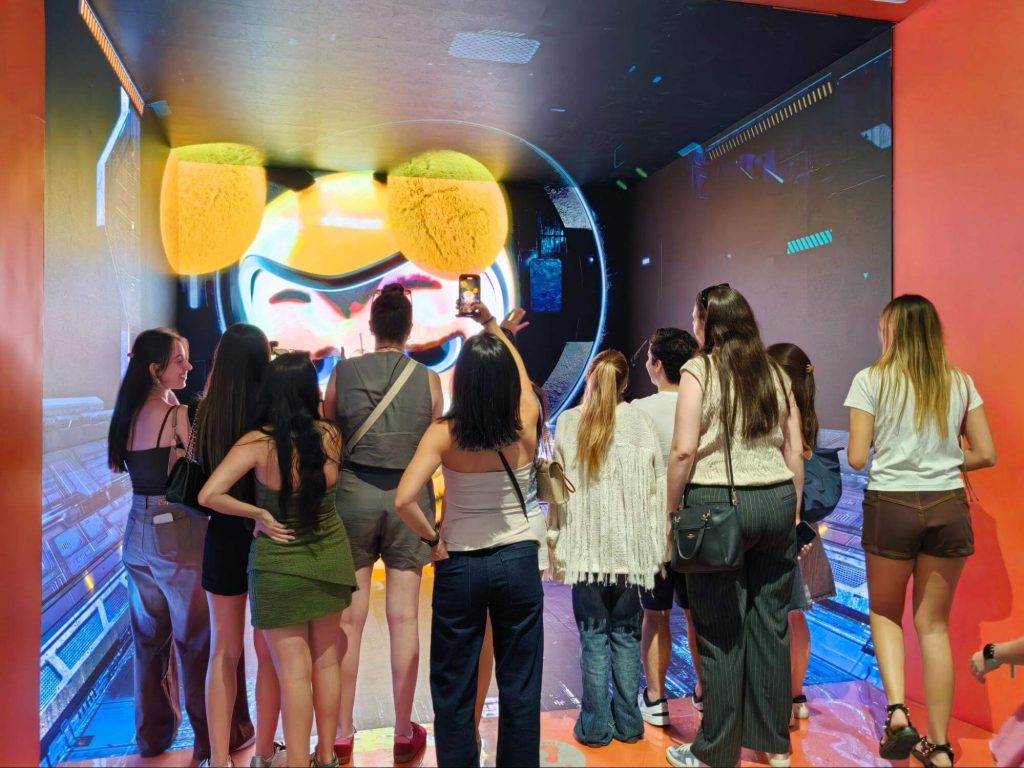
Students do not need a technical background to benefit from exposure to China’s innovation economy. What matters is how the experience is framed.
A visit to a logistics center, for example, can open discussions that extend well beyond operations:
Similarly, observing smart city infrastructure can lead to questions that connect multiple disciplines at once. Urban planning, data science, governance, and ethics all intersect in ways that are difficult to replicate in a classroom setting.
Not every industry lends itself equally well to student engagement. In China, several sectors stand out because they are both accessible and directly relevant to curriculum areas:
Not all destinations in China offer the same type of learning. The country’s scale means that each major city operates within a distinct economic and strategic role. For educators planning educational travel in China, this is not simply a logistical consideration. It directly shapes what students can observe, question, and ultimately understand.
Rather than trying to cover everything in one program, more robust China school trips focus on depth. Choosing the right city means choosing the lens through which students will interpret China’s development.
Beijing provides a vantage point that is difficult to replicate elsewhere. It is where national strategy, academic research, and technological ambition intersect.
Students here can begin to understand how innovation is not only driven by companies, but also shaped by policy, funding priorities, and long-term planning. This is particularly relevant for subjects such as politics, economics, and global studies.
A well-structured visit to Beijing might allow students to:
Shenzhen operates at a completely different pace. It is often described as a center for hardware innovation, but that description does not fully capture its educational value. What students encounter here is a working ecosystem where ideas move quickly from concept to production.
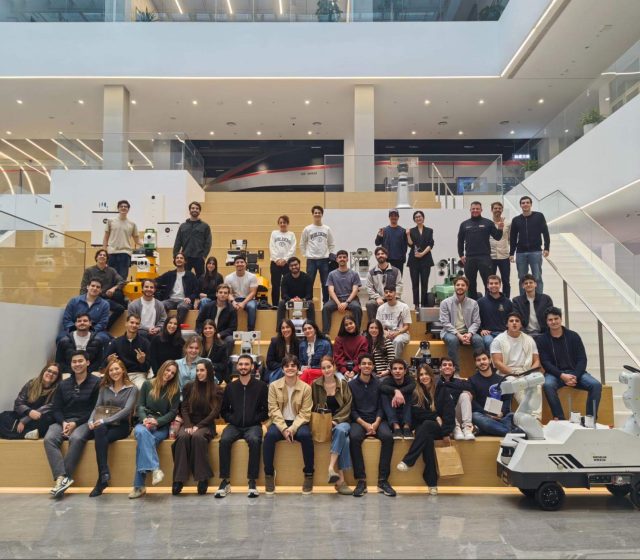
In contrast to more theory-driven contexts, Shenzhen allows students to observe:
A short visit to a manufacturing or innovation space can prompt questions that link directly to engineering, design, and business curricula. Students begin to see how constraints, resources, and speed influence outcomes in real time.
Shanghai offers yet another perspective. Here, the focus shifts toward how China connects with global markets and how technology integrates with finance and urban development.
For students studying economics or business, the city provides a live case study of globalization in action. Financial systems, multinational companies, and digital platforms all operate within a highly international environment.
Instead of isolated observations, educators can frame Shanghai as a system to be analyzed:
The importance of educational travel in China is evident when students link their classroom knowledge to their real-life observations. Lacking that connection, even the most remarkable site visits may turn into standalone experiences instead of contributing to a wider learning journey.
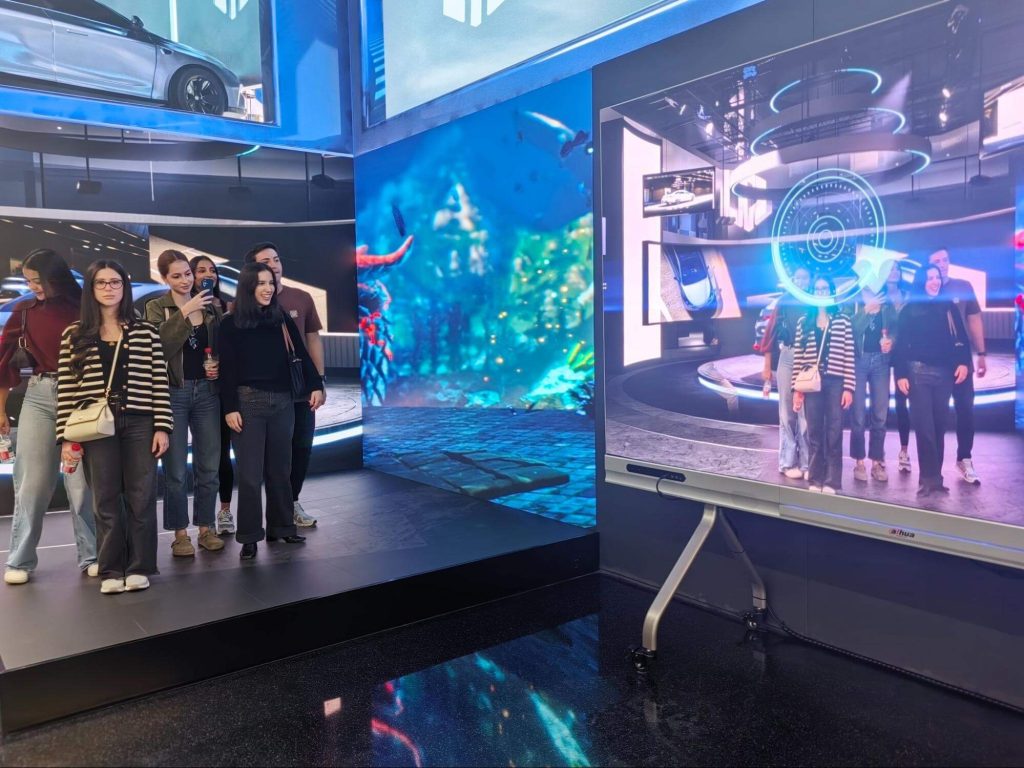
This entails creating programs in which every action supports a particular subject area. A trip to a production center in Shenzhen, for example, can enhance engineering and design ideas, while time spent in Shanghai’s finance areas can enrich knowledge of worldwide markets and economic structures. The aim is not to include everything, but to guarantee that every experience serves a distinct academic objective.
Teachers can enhance this connection by posing a straightforward question during preparation: which idea will learners grasp more effectively due to this visit? When the response is specific and quantifiable, the experience is probably going to provide genuine value.
Planning effective educational travel in China requires a shift in mindset. The question is no longer which destinations are popular or convenient, but which environments will actively support learning objectives. A well-designed program is built with intention at every stage, from selecting cities that align with subject areas to structuring experiences that move students beyond observation into analysis.
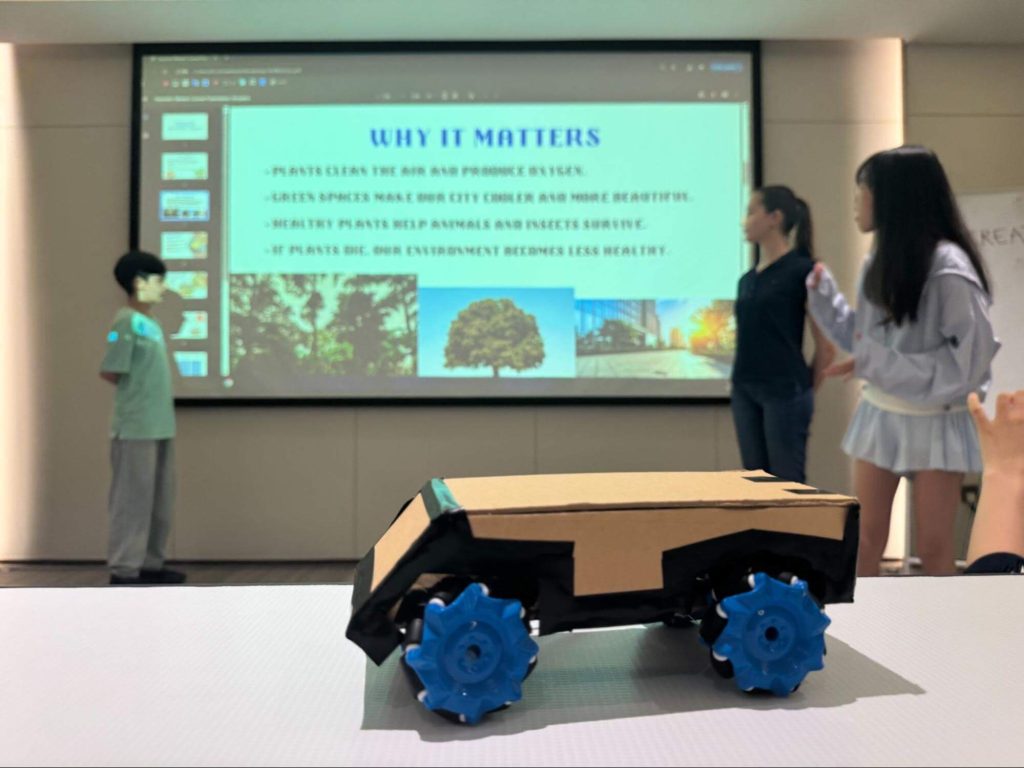
The difference between passive travel and meaningful educational outcomes often comes down to how
destinations are chosen and used. A visit to an innovation hub, for example, only becomes valuable when students are guided to examine systems, question assumptions, and connect what they see to broader academic themes. The same applies to historical and cultural sites. Without context and purpose, even the most significant locations risk becoming disconnected experiences.
At WildChina Education, we have seen that the most impactful China school trips are those designed with learning at the center. When destinations are selected with purpose, educational travel in China becomes a powerful tool for developing global awareness, critical thinking, and real-world understanding.
© 2026 All rights reserved.
Terms and Conditions